Sally Cunningham Kane did not grow up expecting to become a peace activist. She grew up in the Midwest, in a world of cornfields, family routines, church life, school days, newspapers, and the quiet pressure of the 1950s. Like many children of that era, she was protected from some things and exposed to others before she could fully understand them. The Cold War hovered in the background. Civil rights struggles moved across newspaper pages. Cuba appeared in headlines as a place of conflict, fear, and political mystery. At first, these events were distant. They belonged to adults, politicians, history books, and countries that seemed far away. But the outside world kept pressing in.
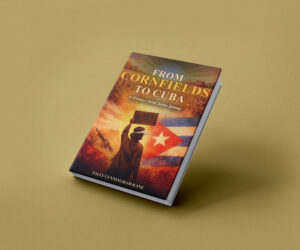
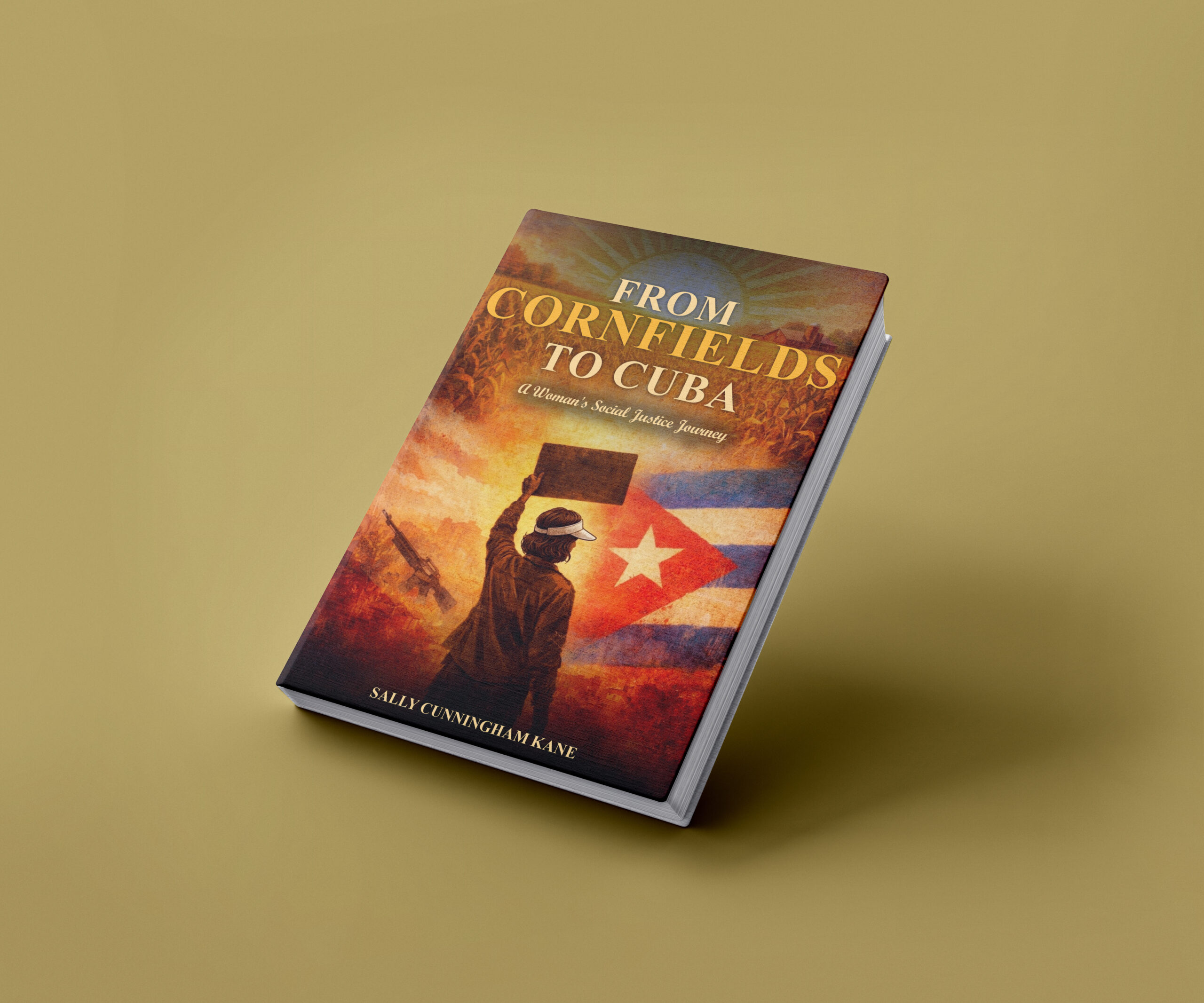
From Cornfields to Cuba: A Woman’s Social Justice Journey follows Kane as that early curiosity grows into conviction. The memoir is not the story of one sudden transformation. It is the story of a woman slowly learning to see. She notices unfairness. She questions what she has been taught. She begins to connect faith with responsibility. She discovers that peace is not simply the absence of war, and justice is not only something people talk about in church or politics. It is a way of living.
Kane’s life unfolds against some of the defining moral struggles of the twentieth century. She comes of age during the civil rights movement, the Vietnam War era, the women’s movement, and decades of debate over socialism, capitalism, faith, and freedom. Her personal story is never separate from the world around her. Family, marriage, motherhood, church, community, and activism all become part of the same larger question: how does a person live honestly in a world full of suffering and contradiction?
The book’s title finds its deepest meaning in Kane’s 1981 trip to Cuba. At the time, few Americans had the chance to see the island outside the frame of Cold War suspicion. Kane traveled there as part of a Global Education Study Tour, arriving with questions that many Americans carried. What was Cuba really like? What had the Revolution changed? What had it cost? What did people believe, fear, hope for, and defend?
What she found was not simple. Cuba, in her account, is complex, human, beautiful, wounded, proud, and politically charged. She encounters a nation shaped by colonization, revolution, poverty, reform, faith, education, and fierce arguments about sovereignty. She also meets people whose lives challenge the easy categories often used to explain another country from a distance.
That is what gives the memoir its strength. Kane does not write as someone claiming to possess every answer. She writes as someone willing to be unsettled. She listens. She studies. She remembers. She allows discomfort to become part of understanding.
The memoir also carries a strong faith current. Kane’s spirituality is not presented as private comfort alone. It becomes tied to action, conscience, and the dignity of others. In the book, faith and justice keep moving toward each other until they are almost impossible to separate. The result is a life story that speaks not only to readers interested in Cuba or activism, but to anyone who has ever wondered how ordinary people become brave enough to care beyond the borders of their own lives.
From Cornfields to Cuba is also a woman’s story. Kane writes about growing up in a time when women’s roles were tightly drawn and often quietly enforced. Her path moves through marriage and motherhood, but it does not stop there. Instead, those experiences deepen her awareness of community, vulnerability, and responsibility. Her voice becomes the voice of someone who has lived through history not from a podium, but from kitchens, churches, meetings, friendships, travel, and years of paying attention.
The book reminds readers that social change is not only made by famous leaders. It is also carried by people who ask better questions, write letters, join movements, raise families with conscience, cross borders, listen carefully, and refuse to stop caring. Kane’s memoir begins in cornfields, but it does not stay there. It moves outward into Cuba, into faith, into peace work, and into the long, unfinished labor of building a fairer world.